520-540-0139
Thermal Imaging
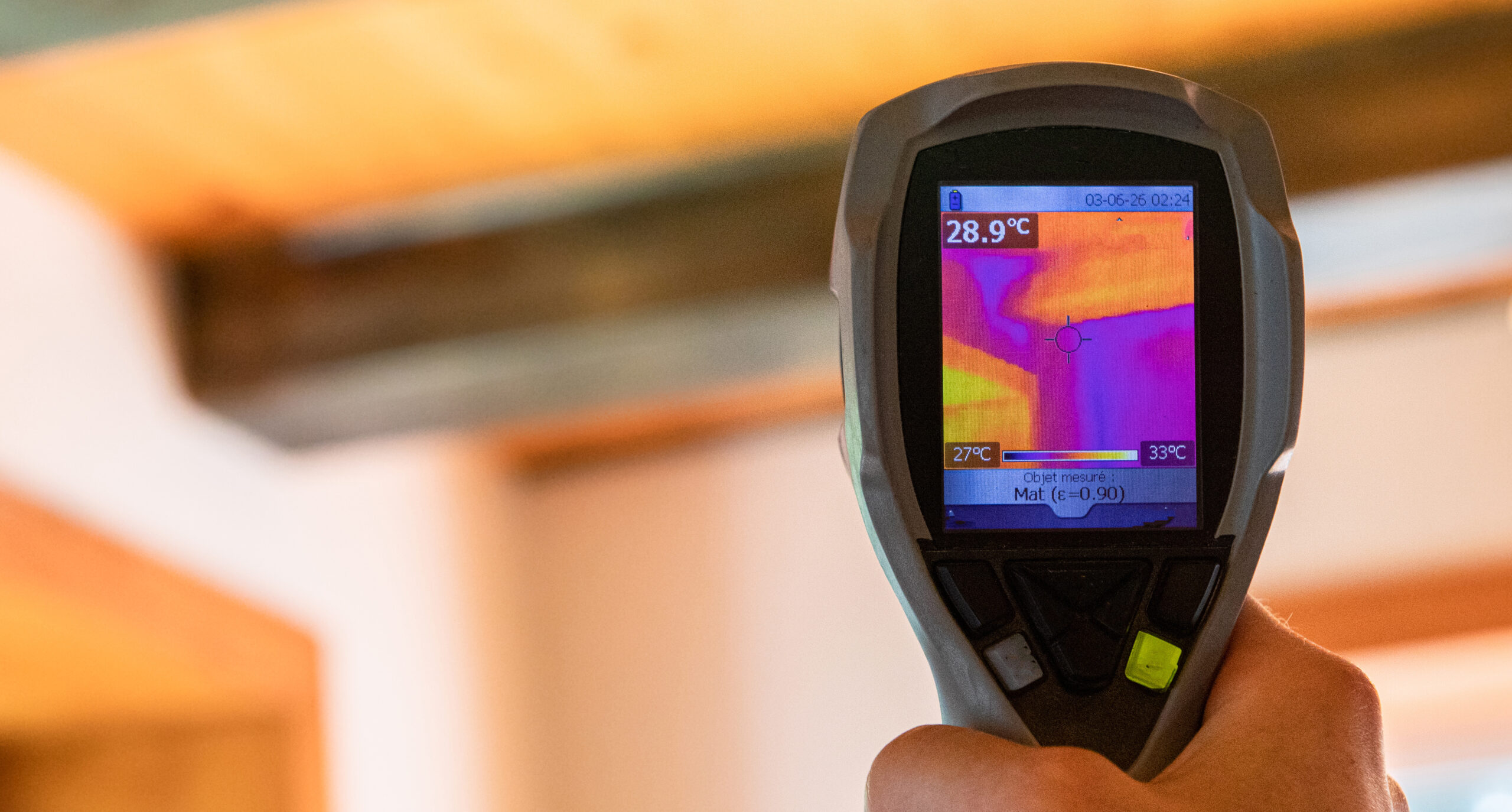
Thermal Imaging uses an infrared camera to see heat transfer in a building. Many people think thermal imaging enables one to “see through walls”, but that is not the case. It enables the inspector to visualize heat transfer through different materials. For example, the temperature of a framing stud will usually be different than the insulated wall cavity between the framing studs. Evaporation of water from a material’s surface will be cooler than the surrounding material. Air leakage around doors and windows is visible in wispy patterns.
Using an infrared camera can potentially help identify issues such as:
- Roof leaks, which can lead to mold
- Water leaks, which can lead to mold
- Missing, displaced, or insufficient insulation, which can result in higher utility bills
- Air leakage, which can result in higher utility bills
- Overheating electrical, which would be an electrical/fire safety concern
Our inspectors are Level 1 Certified Infrared Thermographers, so we can accurately interpret the infrared images.
It is best to do thermal imaging, when there is at least a 15-degree Fahrenheit temperature difference (Delta T) between the interior and exterior temperatures of the building.